All about crypto mining
The Ledger Nano S Plus is a premium yet affordable hardware wallet designed for crypto enthusiasts seeking top-tier security and versatility. With its compact design, advanced features, and support for thousands of cryptocurrencies, the Ledger Nano S Plus is ideal for users who prioritize asset protection without breaking the bank https://followmycal.com.
While security is paramount, usability is also crucial when choosing a crypto wallet. You want to feel comfortable navigating your wallet, whether you’re checking your balance, making a transaction, or interacting with decentralized apps (DApps). A wallet’s user interface (UI) should be clean, intuitive, and easy to understand, even for beginners.
Nodes on the blockchain network verify the signature to ensure it is valid. Once confirmed, the transaction is recorded on the blockchain, making it permanent and secure. This process prevents unauthorized access or tampering.
The Ellipal Titan is priced at approximately $169, making it a premium hardware wallet targeted at users who value security above all else. This price is reflective of its advanced features, such as its air-gapped design, metal body, and anti-tamper mechanisms, which are aimed at providing unparalleled security for cryptocurrency holders.

All about crypto coins
A number of aid agencies have started accepting donations in cryptocurrencies, including UNICEF. Christopher Fabian, principal adviser at UNICEF Innovation, said the children’s fund would uphold donor protocols, meaning that people making donations online would have to pass checks before they were allowed to deposit funds.
Immutable means that something can never be altered. The transactions that enter a blockchain, therefore, can never be altered or tampered with. This makes both double-spending and counterfeiting almost impossible – a regular problem with fiat currencies such as the US dollar.
Mining is the term used to describe the process of creating cryptocurrency. Crypto transactions need to be validated, and mining performs the validation and creates new cryptocurrency. Mining uses specialized hardware and software to add transactions to the blockchain.
If demand for Bitcoin grows, for example, the interplay of supply and demand could push up its value. If people began using Bitcoin for payments on a huge scale, demand for Bitcoin would go up, and in turn, its price in dollars would increase. So, if you’d purchased one Bitcoin before that increase in demand, you could theoretically sell that one Bitcoin for more U.S. dollars than you bought it for, making a profit.
Bitcoin has been characterized as a speculative bubble by eight winners of the Nobel Memorial Prize in Economic Sciences: Paul Krugman, Robert J. Shiller, Joseph Stiglitz, Richard Thaler, James Heckman, Thomas Sargent, Angus Deaton, and Oliver Hart; and by central bank officials including Alan Greenspan, Agustín Carstens, Vítor Constâncio, and Nout Wellink.
All about ada crypto
Cardano was founded back in 2017, and named after the 16th century Italian polymath Gerolamo Cardano. The native ADA token takes its name from the 19th century mathematician Ada Lovelace, widely regarded as the world’s first computer programmer. The ADA token is designed to ensure that owners can participate in the operation of the network. Because of this, those who hold the cryptocurrency have the right to vote on any proposed changes to the software.
In September 2021, the ‘Alonzo’ hard fork brought Cardano into its ‘Goguen’ era, allowing users to develop and deploy smart contracts. Smart contracts allow for the automatic execution of a predefined action when conditions are met.
*By submitting your email, you are agreeing to receive promotional emails from tastylive, Inc. and tasty Software Solutions, LLC. Unsubscribe at any time by clicking the link included in each promotional email.
Cardano was one of the first successful proof-of-stake blockchains. The project continues to take pride in the peer-review process that all of the developed technology goes through before launch. This is in stark contrast to the approaches taken by most other projects that tend towards ‘trial-by-fire.’
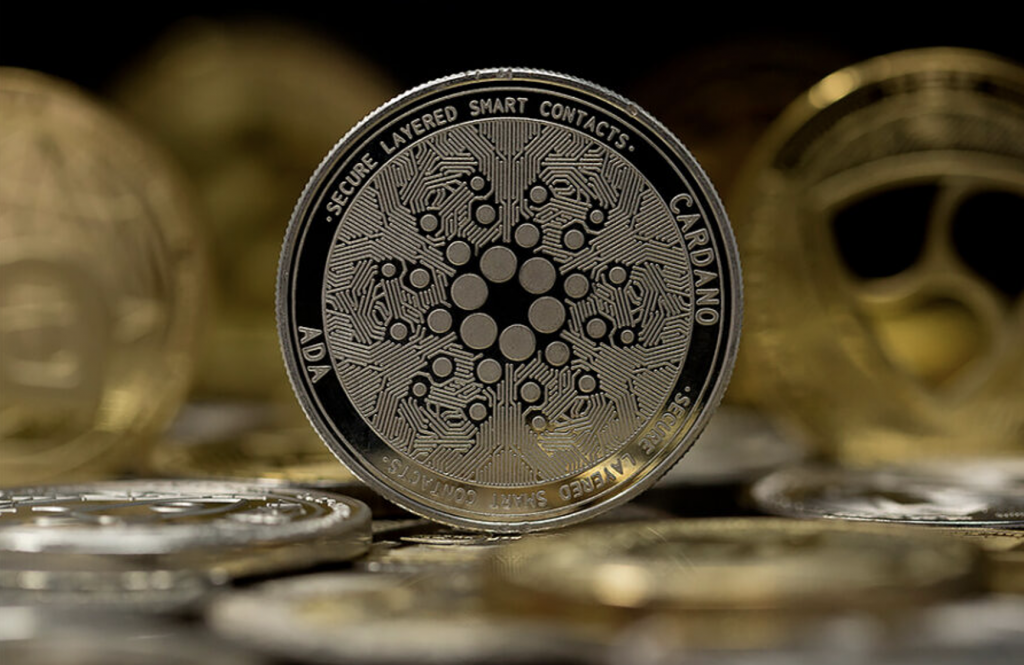
Cardano was founded back in 2017, and named after the 16th century Italian polymath Gerolamo Cardano. The native ADA token takes its name from the 19th century mathematician Ada Lovelace, widely regarded as the world’s first computer programmer. The ADA token is designed to ensure that owners can participate in the operation of the network. Because of this, those who hold the cryptocurrency have the right to vote on any proposed changes to the software.
In September 2021, the ‘Alonzo’ hard fork brought Cardano into its ‘Goguen’ era, allowing users to develop and deploy smart contracts. Smart contracts allow for the automatic execution of a predefined action when conditions are met.
What is crypto all about
Systems of anonymity that most cryptocurrencies offer can also serve as a simpler means to launder money. Rather than laundering money through an intricate net of financial actors and offshore bank accounts, laundering money through altcoins can be achieved through anonymous transactions.
Cryptocurrency, sometimes called crypto-currency or crypto, is any form of currency that exists digitally or virtually and uses cryptography to secure transactions. Cryptocurrencies don’t have a central issuing or regulating authority, instead using a decentralized system to record transactions and issue new units.
No limits on transactions: The lack of a centralized authority means that no one can impose limits on crypto transactions. Crypto users are free to use their assets as often as they like without any restrictions on the number of purchases or withdrawals.
Bitcoin’s founder, Satoshi Nakamoto, supported the idea that cryptocurrencies go well with libertarianism. “It’s very attractive to the libertarian viewpoint if we can explain it properly,” Nakamoto said in 2008.
However, in 2021, there was a backlash against donations in bitcoin because of the environmental emissions it caused. Some agencies stopped accepting bitcoin and others turned to “greener” cryptocurrencies. The U.S. arm of Greenpeace stopped accepting bitcoin donations after seven years. It said: “As the amount of energy needed to run bitcoin became clearer, this policy became no longer tenable.”